AMC: Searching for a Golden Future to Match its Recent Past
 Their trifecta will go down in television folklore, a golden trio within a golden era. While one of them is still on the air with no end in sight, it is painfully clear that its companions left a hole behind. That hole is deep enough that AMC has already taken enormous steps towards filling it.
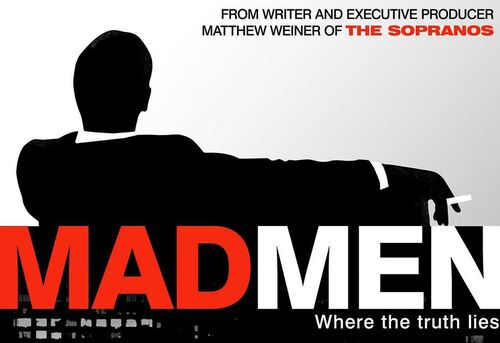
In the latter part of 2007, AMC changed its formula front and centre with their first original television series. Months later, in early 2008, they premiered a second series. Mad Men and Breaking Bad, in that order respectively, helped to revolutionise television. Both have already gone down in history as two of the greatest drama series of all time.
Breaking Bad came to its organic conclusion in 2013, after just 5 seasons (short in many cases, but on its own terms). Mad Men ended early this year, after 7.
Then in 2010 came The Walking Dead, an adaptation of the comic book series by Robert Kirkman. These three shows were not the only attempts AMC made. I refuse to proclaim that their track record is absolute and without flaw. But when their third hit, a drama-horror series with the same intent as its source material (the zombie movie that never ends), AMC’s torch was arguably the brightest.
With hits and misses along the road as the company took risks during their development, their staples ensured that their house would not fall down. The Walking Dead has become the most watch basic cable program in history. Breaking Bad is the most critically acclaimed series of all time. And Mad Men earned 15 accolades during its life, with one more award season to go (and Jon Hamm’s chance to finally take home a lead actor prize).
In January of this year, a spin-off/prequel to Breaking Bad premiered with Better Call Saul, focussing on criminal attorney Saul Goodman’s rise from struggling lawyer James McGill to the notoriously conniving man that Walter White, inevitably, had to call. Immediately, after a lot of pre-airing scepticism, the show received instant critical acclaim.
Even more recently a companion to The Walking Dead premiered, set in the initial stages of the zombie outbreak, titled Fear the Walking Dead. While it’s too early to predict where this show will go critically, its premiere set all-time cable viewership records, at 10.1 million viewers.
To say that the company is simply cashing in on such enormous winners in recent years would be unfair, despite the level of truth that statement may in fact hold. AMC isn’t throwing all its eggs in the same basket, and while these new series come with a built in audience, story ultimately keeps them tuning in. Whether Fear will match the adoration its parent show has earned is unknown, and if it doesn’t it may come to a premature end. That’s hard to expect though, considering the enormity of the entire Walking Dead franchise.
Better Call Saul had a harder job to do. It premiered with no name recognition (apart from a slogan that admittedly cemented itself into our minds) and with plenty of questions about why we even need a prequel. Vince Gilligan had to present a show that could prove its quality on its own merits.
In those other baskets AMC has scattered around, new shows are in development that may well bring forth their next golden era, a continuation of the recently ended run.
And yes, it’s easy to draw a line and say that AMC’s golden era ended with Mad Men, though with The Walking Dead's continued run, it’s an incomplete line. But when all three shows were running at once, fans and AMC all rejoiced at once.
In their future, Into the Badlands premieres November 15 this year, and promises to be unlike anything else in AMC’s catalogue. It’s a wild kung-fu western, set in a brutal world and, courtesy of the trailer, promises thrilling martial arts goodness.
2016 also welcomes another comic book property, Preacher, and considering their success with Walking Dead, there’d have to be a lot of excitement behind the network’s doors. Broke is a crime drama coming also in 2016, based on a Danish series titled Bankerot. Similarly, earlier this year AMC co-produced Humans, a sci-fi/drama adapted from the Swedish series Real Humans.
AMC brought an end to its unscripted offerings in 2014, apart from Talking Dead and Comic Book Men, and have shown a concentrated effort in capitalising on the revitalisation the company underwent thanks to their top tier trio.
Before Mad Men, before any of their modern, original scripted drama, AMC was a brand that had a firm focus on re-airing classic films. AMC actually stands for ‘American Movie Classics’, and the network debuted on October 1, 1984 as a premium channel.
In 2002, their focus broadened, becoming inclusive of films of all eras and genres. Obviously, heading into such a powerful technological age, AMC had to adapt. A broadcaster of vintage films just wouldn’t have survived now, not on its own.
AMC did have original, scripted programming prior to Mad Men. Their first original series, Remember WENN, aired from 1996 to 1998, and was cancelled after its fourth season. Their next series was The Lot, a sixteen episode failure.
With modest shows like Hell on Wheels in their backlog, and a promising line-up for the future, AMC without a doubt owes a lot of its fortune to the creators headlining their podium-sitters. Despite that, AMC must be congratulated on taking that step. We can theorise that perhaps, had Mad Men not happened, so too would Breaking Bad have eluded them. It would be a very different looking company without that first spark. There may not even be an AMC today at all.
Forever in gratitude to Mad Men as the launching pad, it is still notable that the series boasted the lowest ratings, toward the end of its run, out of the trio. The company will be looking at its other properties as inspiration for the future as opposed to another Mad Men, which restricts itself to a certain niche audience. Recently concluding its second season, Halt and Catch Fire has received positive reception, but similarly is categorised as a series with a narrower audience.
The executive VP of national ad sales for AMC, Scott Collins, said at the time of Mad Men’s near-completion that, while there was a sense of urgency at Breaking Bad’s end point, the same couldn’t be said for Mad Men.
The network had by then settled itself into a groove, attempting with the utmost confidence to provide the best drama all year round, and to do so it chooses to cater to a larger audience. Better Call Saul was briefly the highest ratings receiver on cable, before Fear the Walking Dead climbed the highest of summits to peer back down, as though ‘Saul’ was a speck of dust.
Whether the coming tide of new shows can help keep AMC climbing the ladder of quality is to be seen. That their taking the necessary steps is one thing, but their attempts to replicate the success of their recent history is abundantly clear.
While Saul and Fear are instant winners, there’s doubt over the rest to come. It’s hard to contemplate that Preacher could come close to matching its comic book counterpart’s success, and the new martial arts drama itself may alienate some viewers simply based on its premise.
As viewers all we can do is hope. AMC is not the only light that keeps the golden age of television shining. But they have provided some of the most memorable and influential pieces of not just television, but fiction, of all time. It would be sad to see them fall, whether or not the others fall with them.